Balancing Print Time and Quality
Calibrating layer height variations, support interface geometry, and build orientation angles to cut total print cycles without degrading functional accuracy.
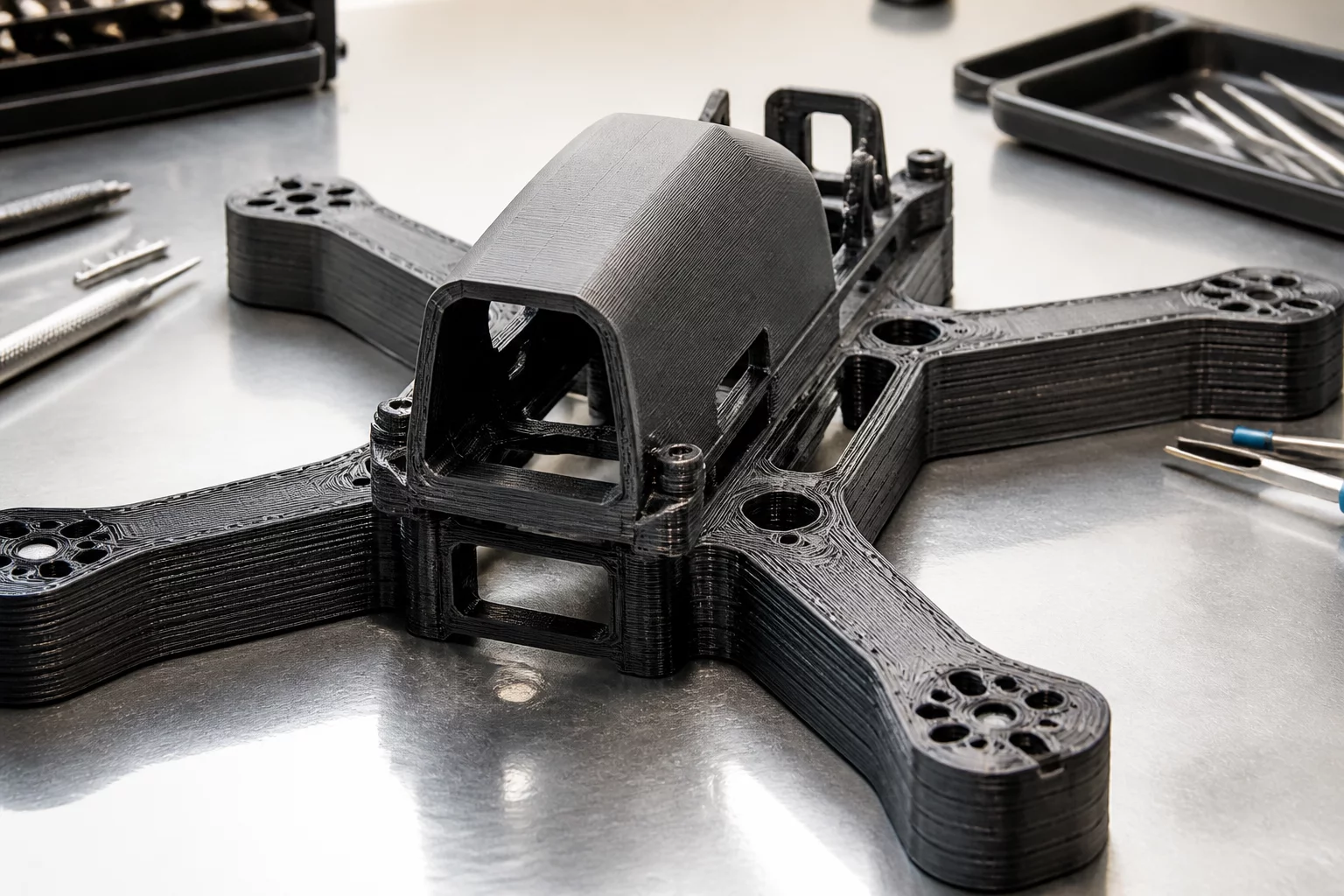
In production-grade additive manufacturing, machine hours translate directly to unit expense and delivery bottlenecks. Orienting a component strictly to shorten build height frequently introduces massive overhangs that demand extensive scaffolding, whereas setting ultra-fine layers uniformly across the entire model leads to exponential print durations. Real engineering efficiency emerges from aligning the part so coarse toolpaths handle bulk geometry while preserving refined layer step increments exclusively on critical contact faces.
Systematic 3D print orientation decisions start with isolating functional mating surfaces from purely structural bulk sections. During a comprehensive PrusaSlicer orientation review, engineers can evaluate local heat retention alongside layer time previews, identifying regions where accelerated volumetric extrusion will not degrade thread profiles or bearing seats. This balance protects tight tolerances while bypassing excessive machine wear.
Diagnostic Principle: The Speed vs. Fidelity Trade-Off
Total print time scales primarily with total layer count and acceleration penalties caused by sharp directional changes. Angling curved faces along the continuous Z-axis while deploying variable layer slicing compresses build cycles by up to 38% without compromising surface roughness standards.
Navigating Part Orientation Trade-Offs
Every spatial adjustment inside the slicing environment triggers corresponding compromises across surface fidelity, tensile resilience, and support contact overhead. Evaluating part orientation trade-offs requires engineers to weigh downstream bench operations against raw machine time. A configuration that shaves ninety minutes off the print job becomes an overall loss if manual post-processing and support de-burring require two hours of skilled technician labor.
- Adaptive Layer Height Implementation: Assign 0.28 mm layer thickness to non-critical vertical structural columns while tapering to 0.08 mm along shallow domes to minimize visible stair-stepping.
- Scaffolding Minimization Strategy: Rotate geometries around the Y-axis between 15 and 30 degrees to exploit self-supporting bridge thresholds, cutting total support material consumption.
- Optimized Toolpath Velocity: Align long uninterrupted perimeters along the machine's stiffest gantry axis to prevent vibration ringing during high-velocity extrusion runs.
Quality Assurance and Production Validation
Before initiating volume manufacturing batches, verify the virtual toolpath simulation against physical calibration coupons. Inspect the first layer perimeter adhesion and verify that variable layer transitions remain smooth and cohesive. By systematically managing slicing density and build platform placement, additive workcells produce dependable components on schedule with repeatable mechanical integrity.
No comments yet. Be the first to leave a comment.