Analytical Slice Calculations for SLA
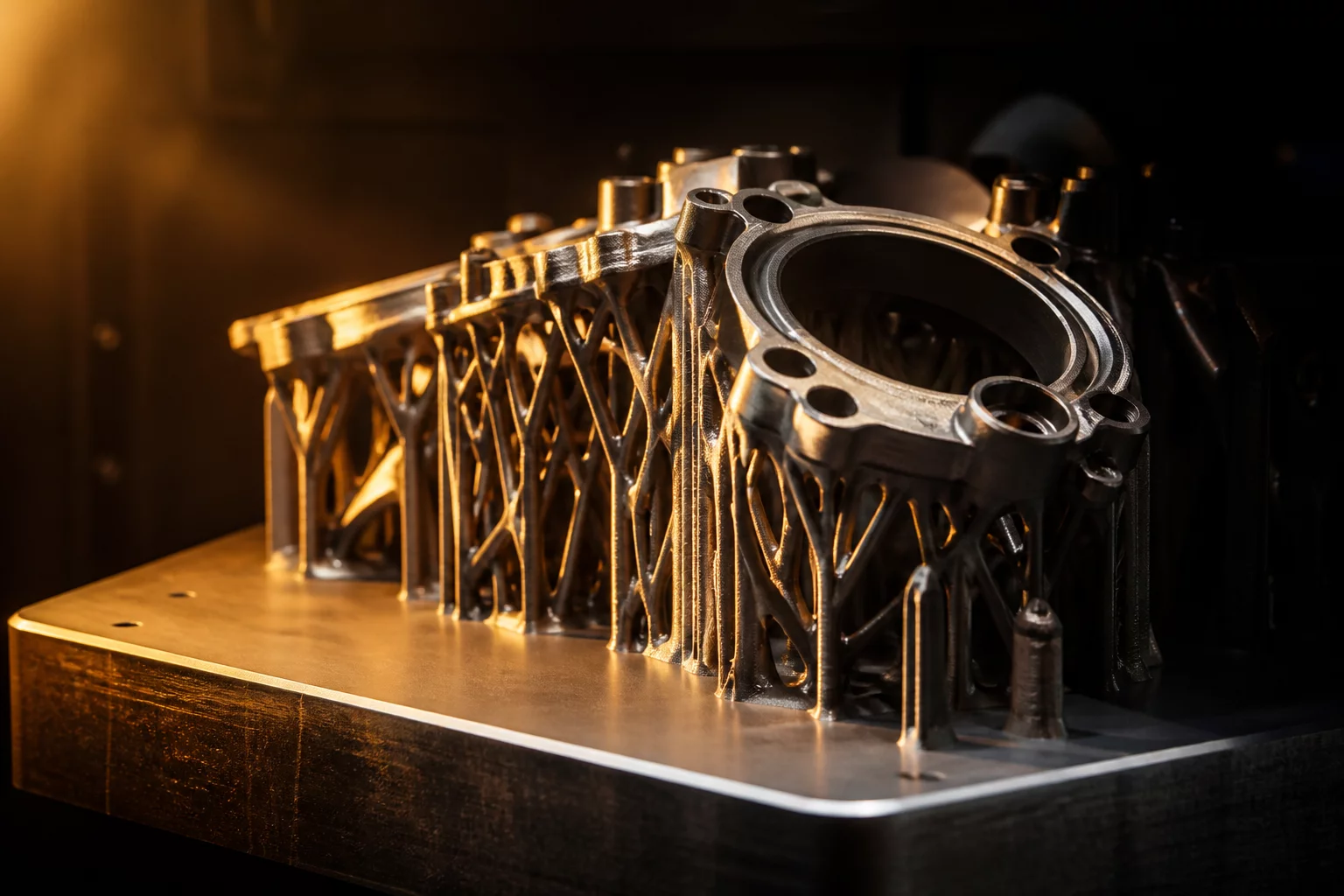
Introduced analytical slice evaluations for stereolithography support generation. By computing geometric intersections mathematically rather than retaining high-resolution discrete voxel rasters, memory consumption drops by up to 64% during full-plate orientation and auto-support synthesis.
ColorMix Multi-Material Layering
Introduced the ColorMix pipeline for intelligent gradient blending and toolpath transition control. Orientation directly governs toolchange purge volume and purge-to-infill efficiency, minimizing filament travel across multi-extruder and single-nozzle multi-material setups.
PrusaSlicer Orientation Decision Matrix
Select a primary engineering target to analyze slicing parameters, support trade-offs, and toolpath alignment.
Mechanical Load Alignment & Z-Anisotropy
In FDM/FFF toolpaths, interlayer adhesion (Z-axis) yields 35% to 55% lower tensile strength than in-plane extruded continuous beads (XY-axes). Orientation must align primary cyclic tensile stresses parallel to the print bed surface.
- Bed Contact Surface: Position flat structural faces directly on the PEI spring sheet to eliminate base supports.
- Perimeter Count > Infill: 4 perimeters with 25% gyroid infill out-performs 2 perimeters with 80% grid infill in torsional rigidity.
- Bore Orientation: Align functional bolt holes vertically to ensure perfect circularity and avoid delamination along shear planes.
Slicer Configuration Profile
Surface Quality & Stair-Stepping Reduction
Gradual curved slopes suffer from visible layer discretization. Angling curved geometries by 45° to 60° relative to the build plate utilizes Variable Layer Height (VLH) smoothing to maximize cosmetic continuity.
- Variable Layer Height: Enable adaptive layer height in PrusaSlicer to scale down to 0.08mm on shallow overhangs.
- Ironing Top Surfaces: Restrict ironing to planar horizontal faces only; never iron tilted or curved contours.
- External Perimeters First: Enhances outer dimensional accuracy on cosmetic presentation mockups.
Visual Metric Targets
SLA Resin Peeling Force & Memory Optimization
Printing large flat surfaces parallel to the FEP film creates massive suction forces during tilt and lift stages. Using PrusaSlicer v2.9.5 analytical slicing enables tilting parts at 30° to 45° with automated support generation that consumes minimal workstation memory.
- Suction Cup Relief: Orient hollow geometries with drainage orifices positioned nearest to the print bed base.
- Cross-Sectional Gradient: Maintain gradual cross-section area changes to avoid layer delamination during peeling.
- Support Head Diameter: Reduce contact points to 0.4mm for aesthetic surfaces and 0.8mm for foundation edges.
Resin Engine Benchmark
Systematic Orientation Assessment Protocols
Anisotropic Load Mapping
Map principal tensile, shear, and compression vectors before slicing. Orient critical structural axes strictly parallel to XY extrusion trajectories to avoid inter-layer delamination under cyclic operational fatigue.
Support Topology Scrutiny
Evaluate support interface footprints. Leverage organic supports to isolate contact spots exclusively to unexposed structural ribs while keeping aesthetic exterior fascias entirely support-free.
ColorMix Purge Management
In v2.9.6 multi-material builds, rotate the model to minimize layer-by-layer tool swaps. Align color boundaries horizontally to eliminate excessive wipe tower purging and toolhead dwell latency.