Angled Orientation for Resin Flow
Optimizing tilt angles in stereolithography and masked SLA to eliminate flat cross-section hydraulic drag, resin entrapment, and peel force delamination.
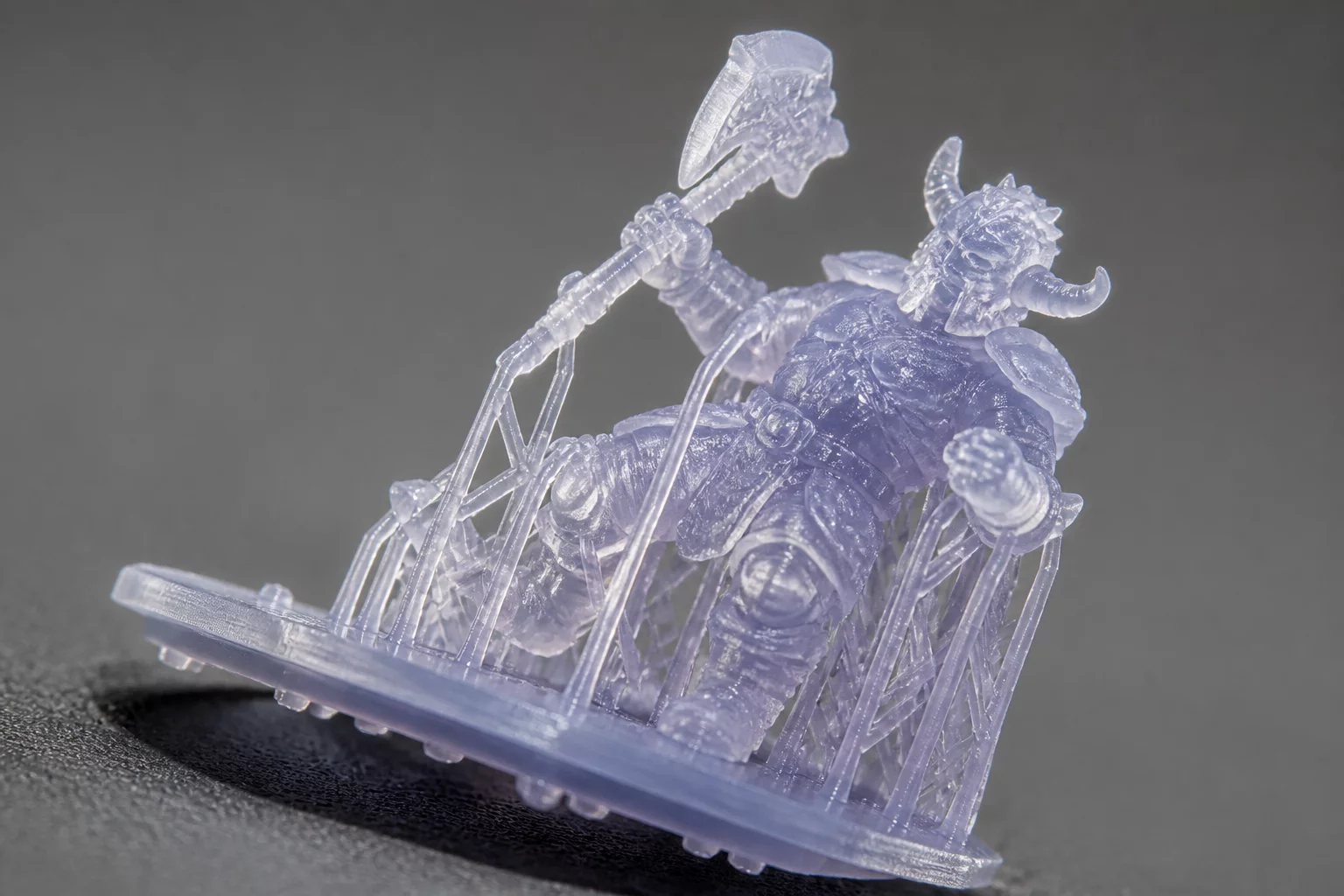
In stereolithography (SLA) and masked LCD photopolymerization systems, orientation dictates not only structural overhangs but also fluid dynamic behavior inside the resin vat. Placing flat planar geometry parallel to the build platform creates massive instantaneous cross-sectional curing areas. When the build plate lifts, these broad flat faces produce violent suction forces against the FEP or release film, frequently causing print separation from the supports, layer shifts, or catastrophic membrane rupture.
Introducing a calculated tilt angle between 30 and 45 degrees transforms broad surface impacts into progressive line-by-line cross-sections. This spatial rotation reduces mechanical peel stress and opens continuous drainage gradients for viscous unpolymerized resin to flow back beneath the part during lift-and-retract cycles, eliminating localized resin stagnation and uneven wall thickening.
Hydrodynamic Principles in Resin Printing
Angling geometry between 30° and 45° reduces peak peel tension by up to 68% while establishing self-draining channels that prevent suction cup formation and resin pooling across deep structural cavities.
Peel Force Attenuation and Viscous Flow Dynamics
During the separation phase of vat photopolymerization, resin must physically rush into the void left behind as the cured layer detaches from the flexible release membrane. If a component features wide horizontal walls or unvented concave cavities oriented downward, resin cannot evacuate quickly enough. The resulting hydrostatic vacuum pulls on the green-state plastic, introducing severe warping, layer separation, and support pin shearing.
- Progressive Layer Peeling: Angling components distributes cross-sectional surface area across sequential layers, converting an abrupt plane detachment into a gentle peeling transition that protects delicate support contact tips.
- Fluid Evacuation Paths: Tilted orientations supply continuous downward slopes, allowing unpolymerized liquid photopolymer to drain back into the vat rather than settling inside internal pockets and curing inadvertently.
- Suction Pocket Elimination: Orienting openings toward the vat platform prevents inverted cup geometry from generating hydraulic entrapment against the release film.
Standardized Slicing Guidelines for Vat Photopolymerization
In slicers such as PrusaSlicer for SL1S or specialized SLA pre-processing software, examine each layer profile under cross-section review mode before generating supports. Avoid orienting flat cosmetic faces parallel to the screen. Pair an intentional 30° to 45° multi-axis canting angle with heavy initial foundation supports on the lowest edge, tapering to light touchpoint supports on higher aesthetic surfaces. This configuration preserves dimensional fidelity while maintaining continuous fluid replenishment throughout extended multi-hour production cycles.
No comments yet. Be the first to leave a comment.