Avoiding Suction Cups in SLA
Mastering fluid dynamics, cross-sectional peeling pressure, and vent hole placement in stereolithography to prevent print failure and layer separation.
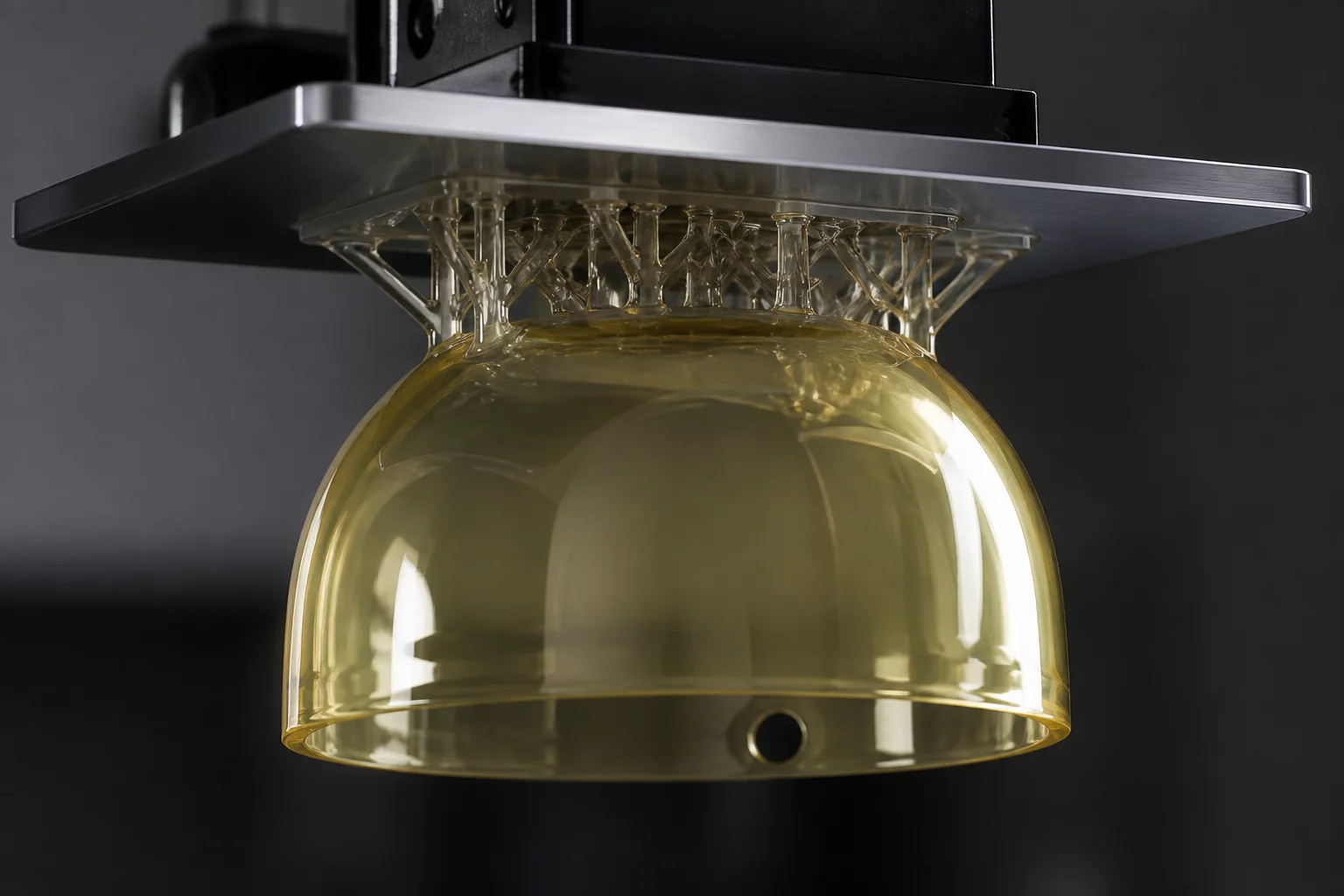
In stereolithography (SLA) and masked stereolithography (mSLA) processes, unvented hollow cavities oriented directly facing the resin vat film generate devastating suction forces. As the build platform ascends during each peel cycle, liquid resin gets displaced outward, while the enclosed chamber creates a localized vacuum against the flexible bottom release film. This hydrostatic pressure spike frequently exceeds the green-state shear strength of partially cured resin layers, tearing the geometry apart or detaching the entire part from its support scaffolding.
When analyzing 3D print orientation decisions for resin systems, recognizing hollow concave geometries before generating supports is paramount. If a hollow shell travels upwards without an air ingress point, the suction cup effect pulls the release film into extreme deflection. Upon mechanical release, the sudden stress release introduces severe delamination lines, dimensional bloating, or complete cavity blowout.
Hydrodynamic Peel Dynamics
A sealed cavity facing the vat floor acts as an industrial piston seal during vertical lift movements. Without adequate venting or angular inclination, peel forces escalate exponentially, overpowering support contact tips and causing catastrophic layer delamination.
Angular Orientation and Vent Hole Strategy
Eliminating the suction cup dilemma requires a combination of geometric canting and strategic vent hole placement. Tilting the part between 30 and 45 degrees ensures that the perimeter of the hollow cavity does not close simultaneously in a single horizontal slice plane. Instead, the void opens gradually, allowing liquid resin to flow freely and equalizing pressure differentials.
- Lowest Point Venting: Place drain holes at the absolute lowest Z-height of the cavity relative to the build plate so atmospheric air enters immediately upon cavity formation.
- Cross-Sectional Gradient Control: Cant the model to guarantee smooth transitional surface area shifts across consecutive layers, avoiding abrupt hydraulic shock waves during the Z-axis lift.
- Slicer Verification Pass: Conduct a layer-by-layer review in the slicer to confirm that internal volumes never create completely enclosed pockets facing downward toward the vat film.
Balancing Surface Integrity with Drainage Efficiency
Managing part orientation trade-offs in resin printing demands balancing drain hole positions against visible cosmetic surfaces. Place drain orifices on non-critical mating faces or internal structural ribs whenever possible. By executing a thorough PrusaSlicer orientation review before curing, engineers ensure that resin evacuation happens smoothly while critical functional tolerances and aesthetic standards remain uncompromised.
No comments yet. Be the first to leave a peer assessment on this SLA case study.