Functional Direction & Load-Bearing Vectors
Aligning mechanical stress paths with continuous extrusion toolpaths to eliminate anisotropic layer cleavage in production-grade FDM and SLA components.
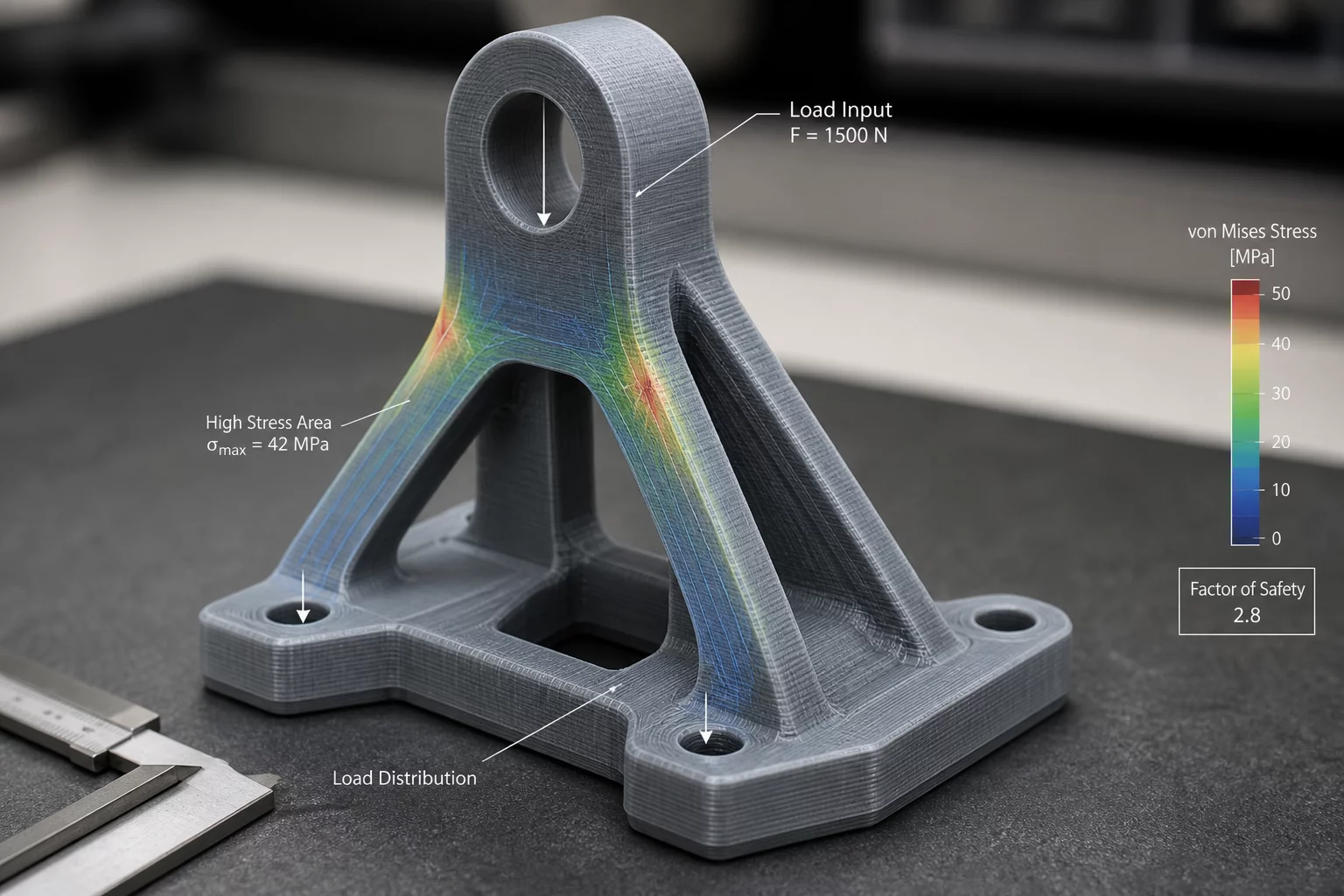
Engineering Fundamentals of 3D Print Orientation Decisions
Executing production-grade additive manufacturing demands an analytical framework that aligns mechanical vectors with geometric intent. Making informed 3D print orientation decisions is not simply a matter of minimizing slicer build time; it is the fundamental bridge between theoretical CAD geometry and real-world functional resilience.
When evaluating part orientation trade-offs, mechanical engineers must systematically assess anisotropic shear lines, staircase effects on cosmetic contours, and interface scarring on fit-critical surfaces. A thorough PrusaSlicer orientation review reveals that subtle 15-degree adjustments on the build table can dramatically redistribute layer boundary stresses away from failure-prone cantilevers.
Key Decision Rule
Never place tensile strain parallel to the layer deposition vector (Z-axis) on primary structural load paths. Align continuous raster toolpaths along the anticipated axis of principal normal stress.
Balancing Structural Load, Surface Geometry, and Post-Processing
Every component layout imposes a tri-fold compromise. Prioritizing peak tensile strength along horizontal filament runs frequently forces delicate curved surfaces onto shallow slopes where staircase discretization becomes visible. Conversely, tilting a part to eliminate visual stepping often introduces extensive overhangs requiring sacrificial support scaffolding.
- Direct Load Paths: Rotate geometry so continuous XY perimeters absorb primary bending moments.
- Concealed Support Scars: Orient mating and visual faces upward or perpendicular to support generation vectors.
- Bore Concentricity: Position precision cylindrical journals vertically to prevent ovalization and slicing discretization errors.
During the detailed PrusaSlicer orientation review stage, utilize variable layer height modifiers and custom support blockers to mitigate interface damage on critical dimensional journals while maintaining structural integrity.
Technical Discourse & Peer Reviews
This could be your first comment.
Submit Additive Insight or Peer Review
All technical contributions are peer-moderated in accordance with ISO/ASTM standards.