Fit-Critical Features
Aligning bearing journals, interlocking dovetails, and mechanical fasteners requires strict prioritization of XY concentricity and support-free mating surfaces.
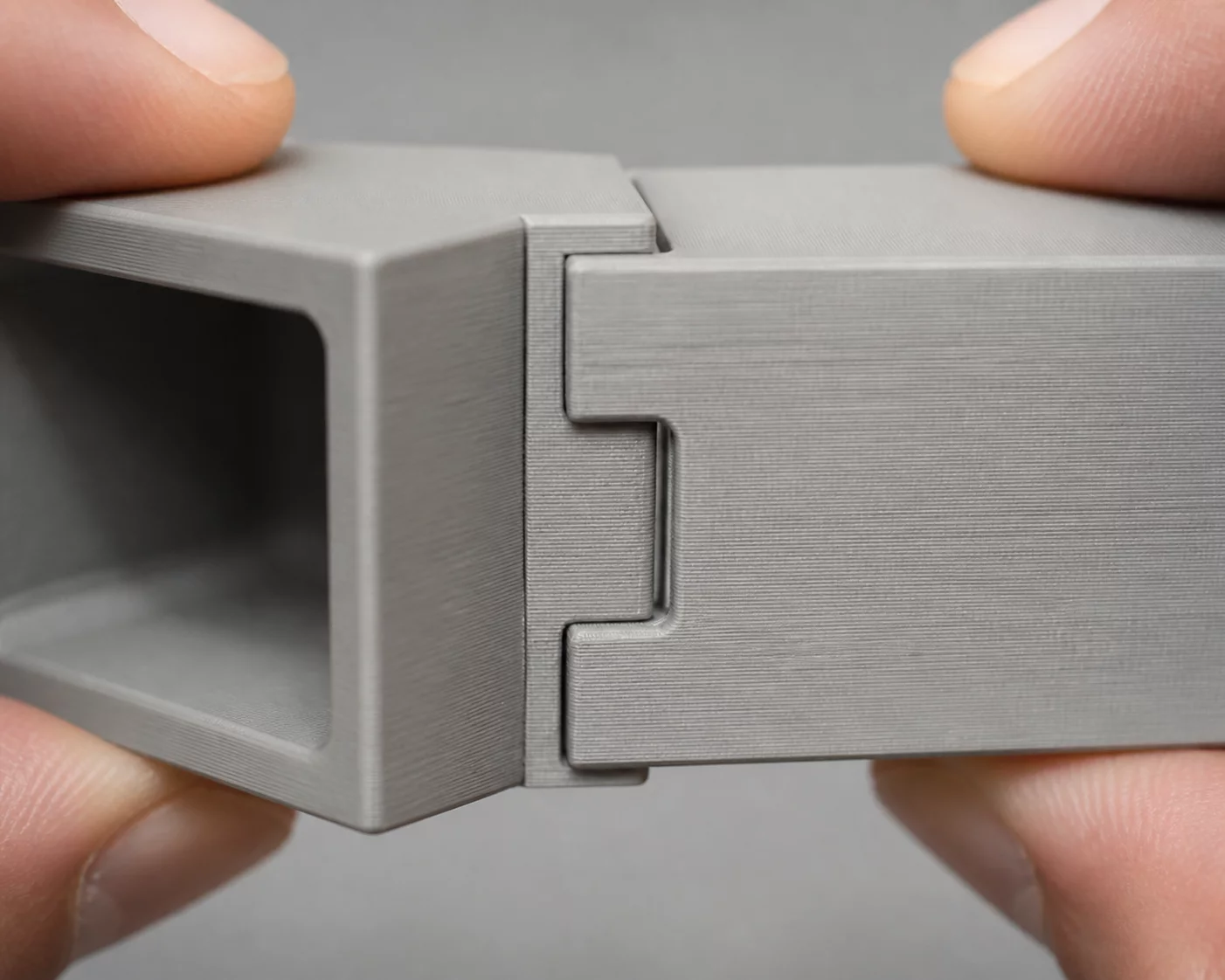
Engineering Precision in 3D Print Orientation Decisions
When manufacturing multi-part assemblies, the functional viability of the entire mechanism hinges on tight geometric tolerances. Making calibrated 3D print orientation decisions ensures that shaft clearances, snap fits, and sliding dovetails retain true dimensional accuracy directly from the build platform without requiring aggressive secondary machining.
When calculating part orientation trade-offs, engineers must differentiate between general cosmetic surfaces and high-precision fit-critical features. In additive systems, stepper motor micro-stepping in the horizontal XY plane consistently yields higher dimensional fidelity than layer-by-layer Z-axis stacking. A rigorous PrusaSlicer orientation review allows designers to evaluate perimeter compensation and hole horizontal expansion settings before committing to production runs.
Core Clearance Rule
Never orient high-tolerance mating faces downward against support interfaces. Support scarring disrupts planar flatness and alters critical interference fits, resulting in unpredictable assembly binding.
Managing Circularity, Threads, and Interlocking Surfaces
Cylindrical features such as bearing journals and fastener bores exhibit stark differences depending on deposition orientation. Printing a cylinder horizontally splits the circular profile across multiple stepped layers, creating an ovalized cavity prone to binding under load. Aligning cylinder bores vertically keeps the entire circular perimeter within continuous single-layer toolpaths.
- Vertical Bore Alignment: Orient press-fit sleeves and dowel holes along the Z-axis to maximize circularity and diameter repeatability.
- Support-Free Threading: Position internal and external threads vertically to eliminate support debris inside thread roots.
- Bed Thermal Stability: Keep broad reference datum planes in direct contact with the build plate to prevent thermal warping across long mating flanges.
- Dovetail Slide Paths: Align sliding tracks along the primary extrusion vector to minimize frictional resistance across layer boundaries.
During the comprehensive PrusaSlicer orientation review stage, inspect slicing previews at 100% zoom to verify that seam placements do not fall across active sliding surfaces or precision bearing seats.
Technical Discourse & Peer Reviews
No technical discourse submissions yet. Be the first to leave a review.
Submit Additive Insight or Peer Review
All technical contributions are peer-moderated in accordance with ISO/ASTM standards.